Arpeggicho
A system that turns played arpeggios into chords in real time
October 2026
1. Overview
The system records and layers the notes you play, one at a time, so you can hear an arpeggio as a chord. Even on an instrument that plays only one note at a time, you can hear your own notes together and explore the harmony in real time.
2. Background and challenge
While practising arpeggios on the saxophone, I found myself memorising the sequence of finger movements and fingering patterns. It was harder to connect the notes I played one by one with the chord they would form when heard together.
This led me to design a tool that layers the notes I actually play, helping me hear the relationship between arpeggios and chords.
3. Approach
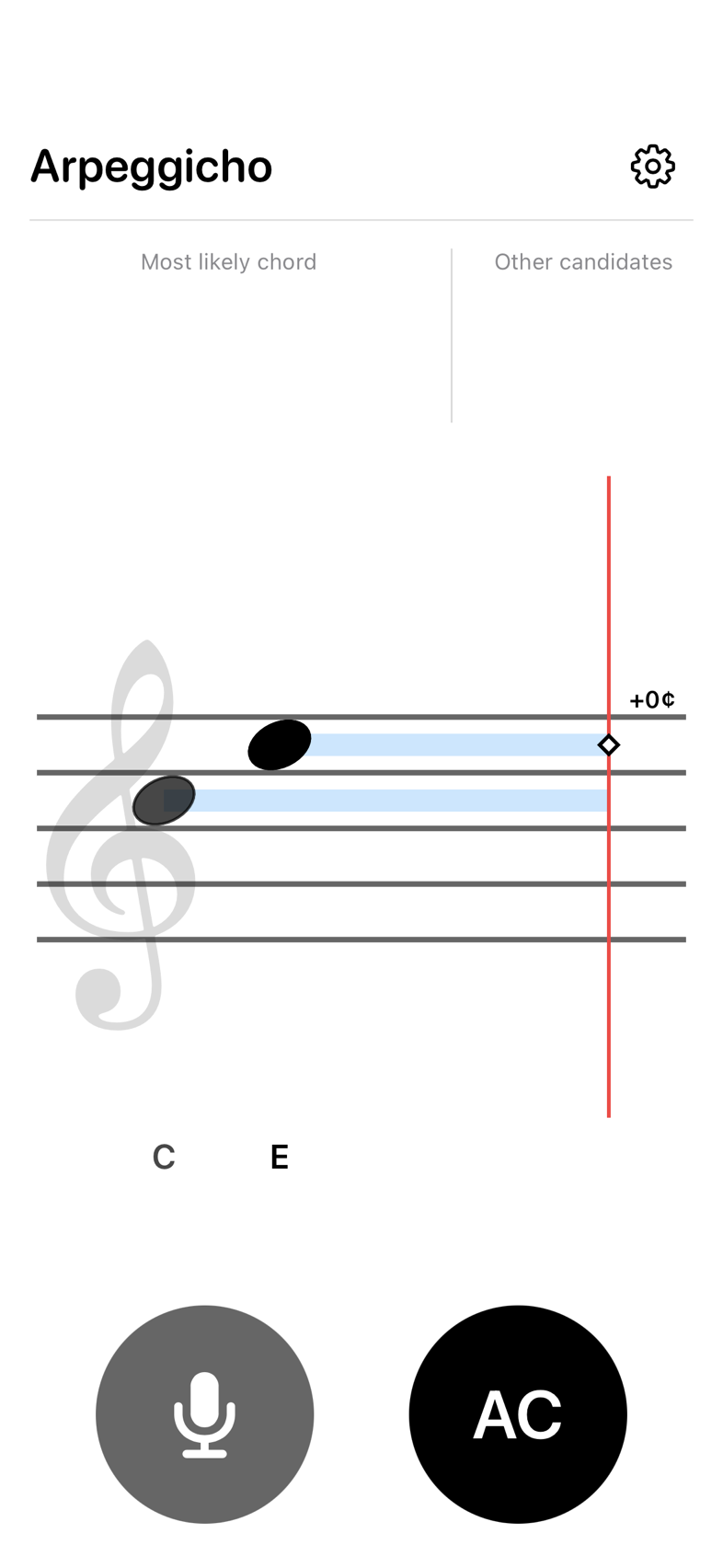
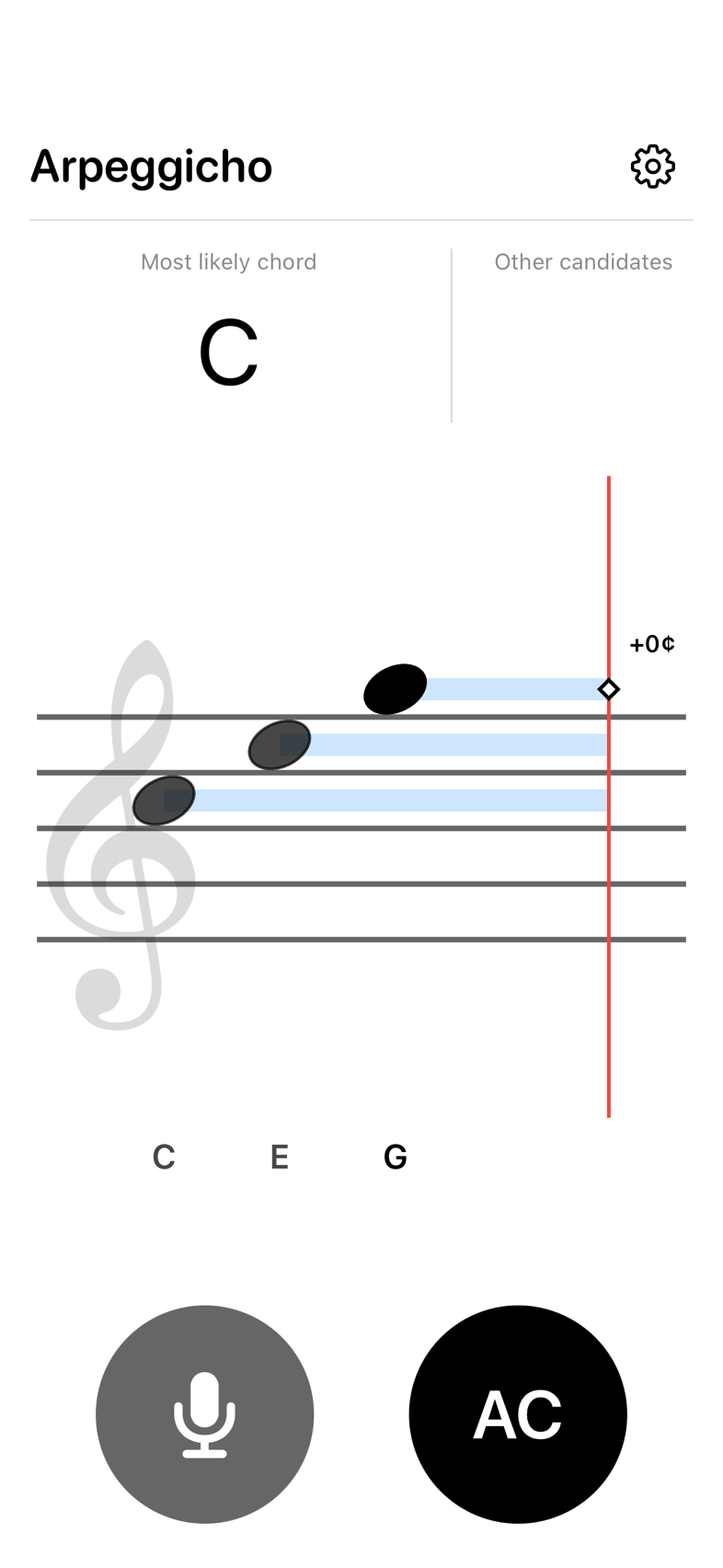
Experience 1: Build a chord as you play
The system keeps playing the notes you have already played. When you play the next note while listening to them, the held notes blend with your live sound, letting you hear the intervals and the harmony as you perform.
Experience 2: Listen back after playing
After you stop playing, your recorded notes continue sounding together as a chord. Without the physical effort of playing the instrument, you can step back and listen to the harmony your arpeggio created.
Key idea: Use your own sound
The playback uses your own performance recorded on the spot, rather than preset instrument sounds. Keeping your tone and intonation connects both experiences—layering notes while playing and listening back afterwards—to your own performance.
4. Design and implementation
Because the system works with sound in a physical space, the environment and the conditions for audio input and output are part of the design. At startup, it measures ambient sound for about one second, then uses that level to adjust the threshold for detecting played notes.
The speaker plays back recorded sound while the microphone picks up new notes in the same space. Since the microphone receives both, distinguishing playback from newly played notes also became an implementation challenge.
Segments with unstable pitch or volume are excluded. The system selects a stable 150–300 milliseconds from each recording and plays it as a loop with smooth joins. It also limits output peaks when notes are layered to keep the volume from becoming excessive.
5. Next steps
The system is still under development and has not been released publicly. I want to improve sound recognition and make the UI/UX easier to use during practice. Its learning benefits have yet to be evaluated; through actual practice, I plan to investigate whether it helps players hear the relationship between arpeggios and chords.