Takafumi Horiuchi | Design engineer
With a background in computer science and Design & Engineering, I have worked in consulting on research, problem structuring, and requirements definition. My research and independent projects explore human cognition and physical interaction, connecting technical systems with the experience of using them through design and prototyping. This portfolio presents the projects and the process behind them.
Recent self-initiated work
-
-
-

-
-
 Personalizing interfaces through constraint-driven design (August 2026)
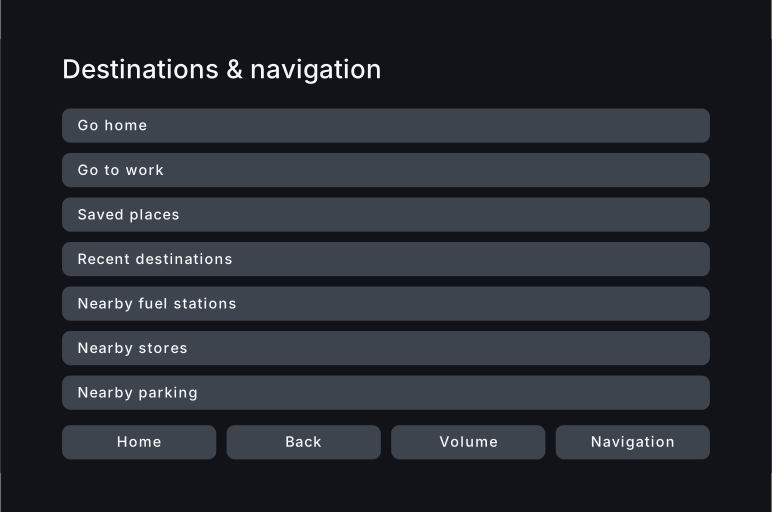
I explored how to generate interfaces tailored to cognitive, sensory, and physical characteristics within the limits of scientific evidence and design constraints. I used a car-navigation proof of concept to generate interfaces and check them against the requirements, exploring the approach’s potential and limitations. Usability and safety have not been evaluated with users.
Personalizing interfaces through constraint-driven design (August 2026)
I explored how to generate interfaces tailored to cognitive, sensory, and physical characteristics within the limits of scientific evidence and design constraints. I used a car-navigation proof of concept to generate interfaces and check them against the requirements, exploring the approach’s potential and limitations. Usability and safety have not been evaluated with users.
-
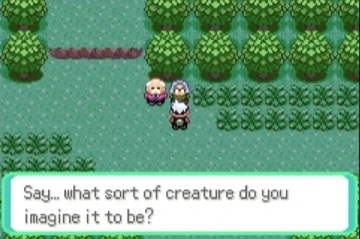 Generating a one-of-a-kind Pokémon (July 2026)
A research prototype that generates a new Pokémon species from the player’s words during play, then lets them encounter and catch it. I designed the constraints the AI must respect throughout that experience.
Generating a one-of-a-kind Pokémon (July 2026)
A research prototype that generates a new Pokémon species from the player’s words during play, then lets them encounter and catch it. I designed the constraints the AI must respect throughout that experience.


Earlier academic work
-
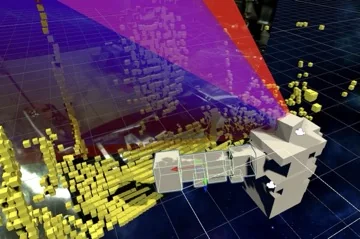 Master’s thesis on human–robot interaction design (July 2021)
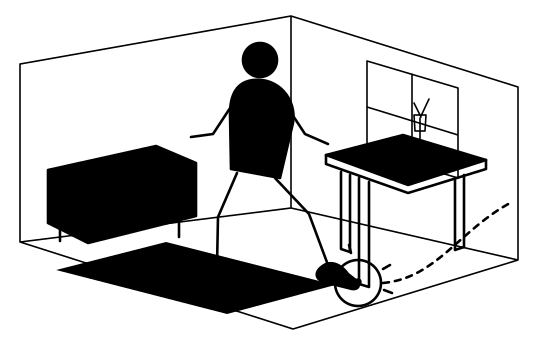
I proposed and implemented a collision-prevention mechanism that uses the operator’s field of view estimated from head orientation to help determine where a robot may move, without requiring objects to be registered in advance. I confirmed the intended behavior in five demonstration trials.
Master’s thesis on human–robot interaction design (July 2021)
I proposed and implemented a collision-prevention mechanism that uses the operator’s field of view estimated from head orientation to help determine where a robot may move, without requiring objects to be registered in advance. I confirmed the intended behavior in five demonstration trials.
-
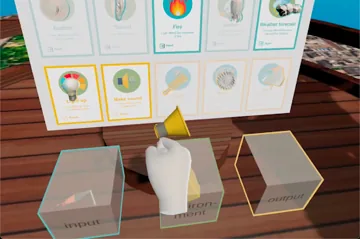 A VR system for children to prototype interactive objects (February 2021)
A VR prototyping environment in which children can assemble and run the smart objects they imagine in the SNaP board game. They define each object’s conditions and behavior using three cards: environment, input, and output.
A VR system for children to prototype interactive objects (February 2021)
A VR prototyping environment in which children can assemble and run the smart objects they imagine in the SNaP board game. They define each object’s conditions and behavior using three cards: environment, input, and output.
-
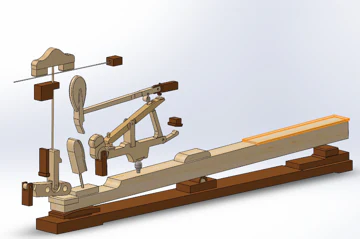 Motion analysis of a piano action (January 2020)
This project reconstructed a piano action in 3D from a cross-sectional drawing and used theoretical calculations and SolidWorks analysis to examine how input at the key translates into hammer velocity and the string’s reaction force.
Motion analysis of a piano action (January 2020)
This project reconstructed a piano action in 3D from a cross-sectional drawing and used theoretical calculations and SolidWorks analysis to examine how input at the key translates into hammer velocity and the string’s reaction force.
-
 Three design studio projects (2019–2020)
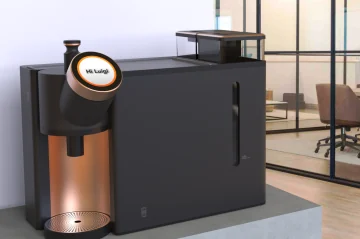
Three group product-design projects completed over three semesters at Politecnico di Milano: a coffee machine for shared spaces, a powered air-purifying respirator (PAPR) for welders, and a contactless blood-donation screening device.
Three design studio projects (2019–2020)
Three group product-design projects completed over three semesters at Politecnico di Milano: a coffee machine for shared spaces, a powered air-purifying respirator (PAPR) for welders, and a contactless blood-donation screening device.
-
 Bachelor’s thesis on constraint programming (June 2019)
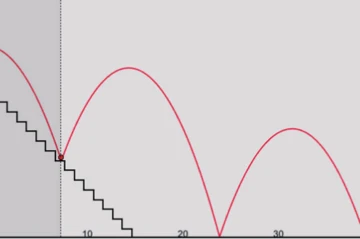
I developed a method that identifies conditions that can no longer become true during a simulation and removes them from the search. It reduced execution time by roughly half in the evaluation model without changing the simulation result.
Bachelor’s thesis on constraint programming (June 2019)
I developed a method that identifies conditions that can no longer become true during a simulation and removes them from the search. It reduced execution time by roughly half in the evaluation model without changing the simulation result.