Foot-Furniture Interaction
October 2026 · Concept planning / Solo project
Why do we bump a little toe
even when we know the furniture is there?
This project explores everyday furniture design through cognitive engineering (currently an unbuilt, untested concept; no evaluation has been conducted).
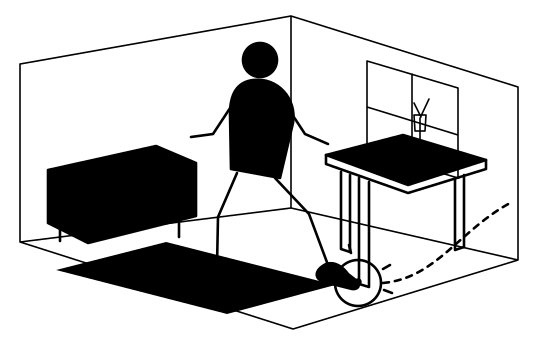
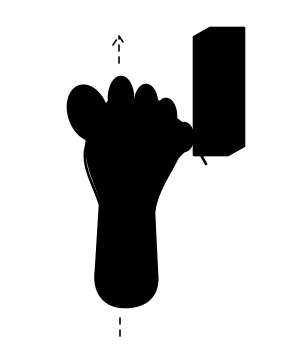
Focus: furniture appearance and foot-level predictions
I bump my little toe against a chair or bed leg. Such a terrible accident happens even when I know the furniture is there. This experience is the starting point.
I want to study how people anticipate the structure at foot level from visible furniture form, focusing on mental models. Does a tabletop’s outline also suggest the position and extent of its supports near the floor?
My working hypothesis is that a mental model of the structure at foot level can influence judgments about where we can pass when we are not continuously looking down. I do not assume the first glance determines everything; I want to observe how this mental model changes as furniture comes into view, we approach, walk beside it and pass beyond it.
Current scenario: walking past furniture
What do people anticipate, when, and how do they move? Relate anticipated boundaries to bodily movement, and locate opportunities for design.
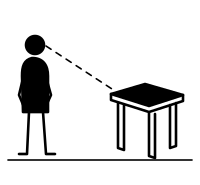
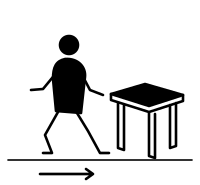
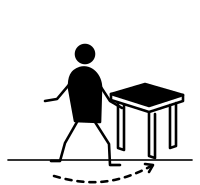
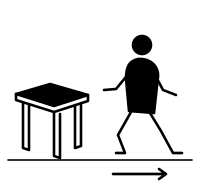
As furniture comes into view, I will consider how its visible overall form suggests the structure at foot level, and whether silhouette, continuity and support visibility offer useful cues.
When approaching, I will observe how judgments about where we can pass change with distance. Foot-level outlines, contrast and placement are design candidates.
When walking beside furniture, I want to observe where the anticipated boundary and the actual range through which feet pass diverge. I will explore foot clearance, moving hard regions inward, softness and deformation.
When passing beyond furniture, I will consider foot movement and attention as it leaves view, and how support structure and surrounding space relate to the path through.
The importance of each situation is still undecided; the diagram does not indicate equal weight or an established causal relation. Observation of cognition, attention and contact will guide priorities.
Design approach: easier to anticipate, easier to walk past
Making furniture easier to anticipate means helping people grasp its foot-level extent from visible outlines and structure as it comes into view. The aim is to support mental-model formation about its foot-level extent and judgments about where people can pass.
Making furniture easier to walk past means relating its structure and surrounding space to actual bodily and foot movement beside it. Hard regions protruding into the range through which a foot passes can create contact even when people move along an anticipated boundary. I want to explore foot clearance, hard-region placement, and responses through softness or deformation to better relate walking and furniture.
The two approaches complement one another by connecting the extent anticipated from appearance with the space feet can actually pass through. Reducing impact when contact occurs is another function to examine separately alongside ease of passage. I want to examine these design approaches through future fabrication and observation.
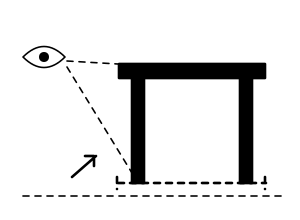
Make foot-level structure easier to anticipate
Use outlines, colour and the visibility of structure to help people anticipate foot-level structure and extent, and judge where they can pass. This addresses mental-model formation as furniture comes into view.
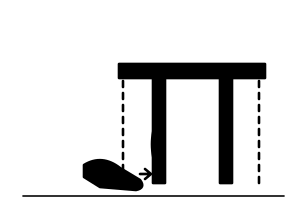
Make passing beside furniture easier
Explore foot clearance and the placement of hard regions in relation to bodily movement past furniture. Softness and deformation are also candidates; I want to examine ease of passage and the consequences of incidental contact separately.
Design proposals: translating principles into form, structure and materials
I envisage a side table as the first study object. To make furniture easier to anticipate at foot level and walk past, I will explore several directions: placing hard supports inward, creating a soft perimeter, and making support outlines easier to see. I will consider how feet relate to legs, aprons, joints and low panels, together with appearance, usability, fabrication methods, load and stability.
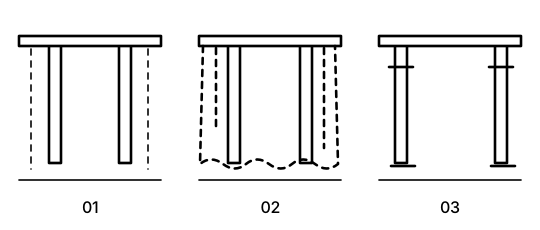
to leave space for feet.
to form a soft boundary.
to indicate their foot-level extent.
The table below organizes candidate elements for mental-model formation about foot-level structure as furniture comes into view and for accommodating the bodily movement of passing beside it. I will explore not only form and structure, but also materials, perceptual cues, motion and deformation, placement and passage.
| Design element | Direction to explore |
|---|---|
| Form and space | Lower corners, cross-sections and foot clearance. Consider the height and protrusions of all hard components, beyond legs, and their positions relative to the boundary anticipated from the visible outline. Placing whole legs inward remains one candidate. |
| Materials | A visible soft perimeter with hard structure; foot movement, contact response, durability and ease of cleaning. |
| Perceptual cues | Silhouette, continuity, contrast, reflection, shadow and revealing or concealing supports. |
| Motion and deformation | Flexing, moving out of the way and returning to the original form in response to foot movement. Examine softness and deformation both as responses to contact and in terms of whether they widen or narrow the space available for a foot to pass. Check for instability or new contact points. |
| Placement and passage | Placement near walls and passages, clearance from nearby furniture, and paths passing beside it. |
For example, fabric hanging from the tabletop might create a visible, soft boundary before a foot reaches a rigid support. I would examine both how the perimeter is perceived and how it responds, including possible entanglement and tripping. Form, material and dimensions are still undecided.
Exhibit concept: communicating the relationship between bodies and furniture through experience
I plan to explore design directions and make a physical prototype, then consider an exhibit at an event such as Maker Faire to communicate how it works. Alongside its appearance and feel in use, I want to show whether it is easier to anticipate at foot level and walk past, and whether little-toe contact becomes less likely.
Simply putting the furniture on display would make the relationship between bodies and furniture difficult to communicate, with limited enjoyment as an experience. A short minigame could instead invite visitors to walk around the furniture themselves, intuitively understand its relationship to their feet, and have fun.
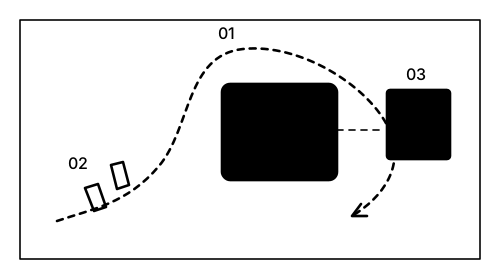
For example, sensors could detect light contact with soft surrogate parts and visualize whether a visitor made contact or passed without touching them as a score. A score that decreases with each contact could help visitors notice differences in form and structure through play.
Visitors could compare a condition modeled on conventional furniture with a design proposal under the same path, space and task. Reviewing contact locations and overlaying trajectories are also possibilities. Sensing methods and scoring are undecided; if entry into a nearby zone is measured, it would be distinguished from actual contact.
The experience would not encourage running or deliberate painful collisions. I would check fall and contact risks before the experience and would not make it a competition for speed. If recording, I would explain its purpose and scope and obtain consent, so places where visitors hesitated or made contact could inform the next prototype.
Next steps: fabrication and testing toward a furniture series
Its foundation is to consider human–furniture interaction through cognitive engineering, exploring furniture that is easier to anticipate at foot level and pass beside.
Through detailed design and fabrication, I want to test how the furniture works in exhibits and other settings, and investigate its effects in everyday use. By building on that knowledge, I aim to develop a series of furniture people want to use every day. In the future, I want people who discover and like it at an exhibit to be able to purchase it and use it in their daily lives.